Imagine the price of chicken in India jumping thirty percent in six weeks because of a disruption in Peru. A poultry seller in a busy sabzi mandi in Chandigarh blames the feed suppliers while turning away customers. The feed suppliers blame the grain market. Eventually, the blame points to the Pacific Ocean. To be more specific, a small silver fish called the Peruvian anchoveta. It sounds absurd. India and Peru are fourteen thousand kilometers apart. Most people do not even know about these anchovies. Yet, the global food economy depends on them.
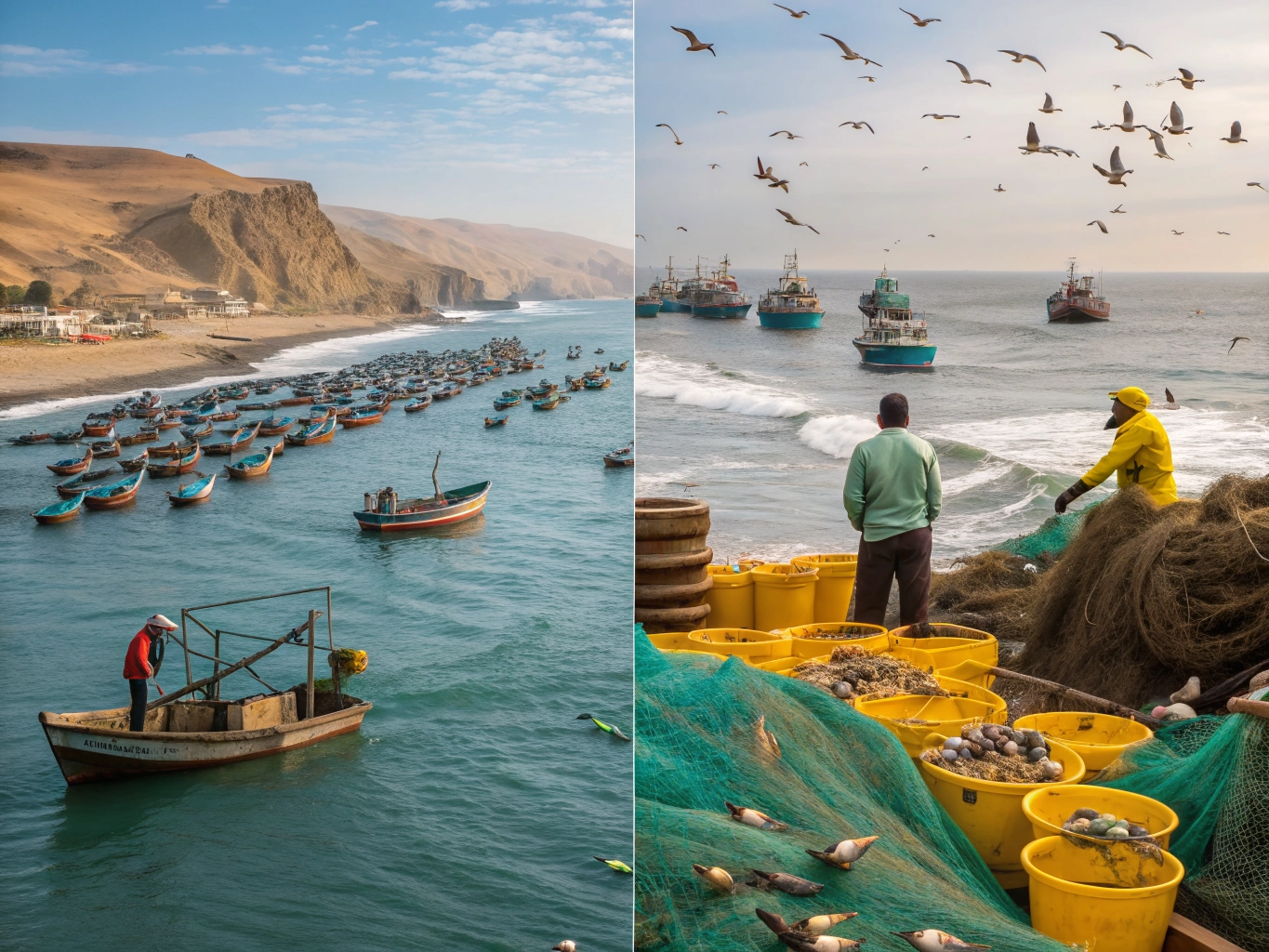
You might never eat an anchoveta. In fact, they are not destined for your plate. Then how do they become so crucial for the global food economy to survive? These fish are mainly responsible for two products: fishmeal, a protein-rich powder, and fish oil, a fat supplement. The products get shipped across the world to feed the animals. The animals we ultimately eat. Fishmeal, being the most protein-dense animal feed, matters enormously when you need to raise a broiler chicken from hatchling to slaughter in forty two days. The alternative to fishmeal is soybean meal, something that is not as efficient. The comparison between the two is that fishmeal contains sixty to seventy percent crude oil; however, soybean meal contains only forty to forty-five percent. The global economy made the mistake of being overly dependent on Peru. Overdependency is often seen in economic events even today. By the early 1970s, Peru had built the world’s largest fishmeal industry, relying abundantly on anchovies. The port of Chimbote was supplying approximately forty percent of the world’s fishmeal. The global chicken and pig industries had quietly reconstructed themselves around this supply. This was the reason most people were dependent on a fish they could not even identify. This dependency wasn’t planned; it just happened because millions of commercial decisions by the farmers, feed millers, and commodity traders chose the same source.
In 1972, El Niño occurred. A warming event that pushes a tongue of warm water south along the Peruvian coast. The anchovies thrive in the cold Humboldt Current, hence getting suppressed due to El Niño. The fish did not disappear, but simply went deeper or relocated, chasing the cold water for survival. The fishing boats started to come back nearly empty as the fish were just too deep down in the ocean. Due to this, the port of Chimbote fell silent. Fishmeal prices tripled within eighteen months. Livestock farmers across Europe, Asia, and North America urgently needed an alternative to fishmeal. They were forced to turn to soybeans. American soybean farmers had been selling their crops at modest prices when suddenly the demand for them surged tremendously. Soybean prices kept soaring along with their demand. The United States had to impose export controls on soybeans due to high domestic food price inflation. Because of this, States like Japan that had built their livestock industries with dependency on soybeans also experienced inflation and heavy disruption in the food industry. Vulnerability is usually disguised as efficiency. Nobody took overdependency on Peru for the supply of fishmeal as an actual threat until it actually led to large-scale suffering of the global food economy.
Ideally, you would think that the world had learnt its lesson. Unfortunately, you would be wrong. After El Niño passed, the fishmeal industry recovered, and the dependency on Peruvian fish protein deepened more than ever. El Niño returned in 2023 stronger than the last time. However, it wasn’t discussed on any major news channels. It didn’t make a headline. The customers assumed it was local, such as summer heat or transportation issues. The customer who got turned away in the sabzi mandi is clueless about all this.
The snowball effect is when a small and seemingly simple event leads to a large economic shift. The dependency on Peruvian fish was an example of this. This effect occurs more in your daily life than you know. The public is not aware of a lot of events that shape their lives economically. In this case, a shoal of fish changed course. A week later, a family in Chandigarh had to pay more for dinner, unaware of the reason.